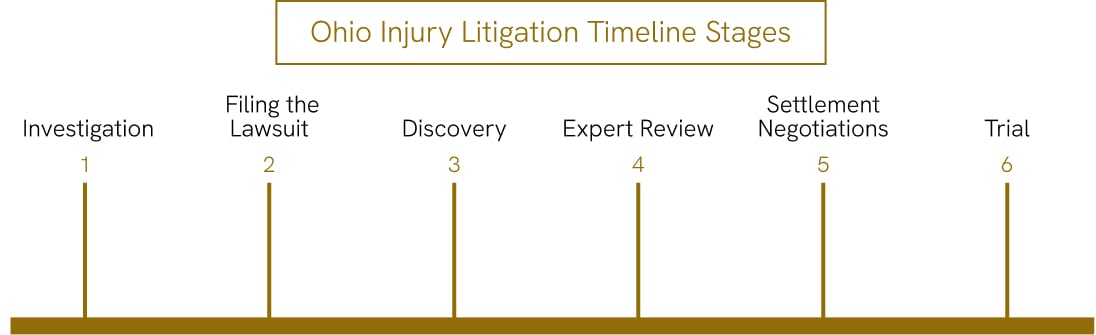
Stage 1: Investigation
There are several key events that happen during this stage. This is when evidence is gathered, public records and medical records are reviewed, and liability is analyzed. During the investigation stage, experts may also be consulted. This is a crucial stage as it builds the foundation of your case.
Stage 2: Filing the Lawsuit
If a fair resolution isn’t reached early, a formal lawsuit is filed. Timing can be critical depending on the type of case.
Stage 3: Discovery
This is often the longest phase during the litigation process. During this stage, both sides exchange documents, written questions, and depositions. We use the discovery process to find evidence to build and strengthen the case before trial.
Stage 4: Expert Review and Expert Discovery
Serious injury cases often require expert analysis to prove:
- Long-term medical impact
- Future care needs
- Lost earning capacity
- Cause of the injury
Stage 5: Settlement Negotiations
Statistics across Ohio show that most cases are resolved before trial, but not all. Settlement can happen in the prior stages but often occurs after discovery is completed when both sides have evaluated the evidence that will be presented at trial.
Stage 6: Trial (If Necessary)
If a fair settlement cannot be reached, the case proceeds to trial. Trials typically last between a few days to several weeks. Following the trial, the jury renders a verdict deciding the case. Some verdicts are then appealed to the Court of Appeals.
What You Can Do During Your Case
While your legal team handles the process, your role matters, here are some helpful tips:
- Follow medical treatment plans
- Keep records of expenses and lost time from work
- Keep your legal team informed of any symptoms, medical concerns, or other issues you experience
- Avoid discussing your case publicly
- Communicate changes in your condition
Related Cases We Handle

.jpg)